
In today’s competitive landscape, understanding the basics of digital marketing is a necessity, whether you’re a business owner, entrepreneur, or just venturing into the marketing field. Digital marketing has grown from a supplementary aspect of marketing to a critical element in reaching and engaging target audiences. For beginners, getting to grips with core concepts like SEO, PPC, and social media marketing can feel overwhelming, but starting with the fundamentals will put you on the right path. In this guide, I, Manoj Ayyagari, will take you through the essentials of digital marketing, drawing on my experience to explain each component in an easy-to-understand way. By the end, you’ll have a clearer understanding of how to implement these strategies to grow your online presence. What is Digital Marketing? At its core, digital marketing refers to any form of marketing that occurs online. It encompasses all activities aimed at promoting products or services through digital channels such as search engines, websites, social media, email, and mobile apps. Unlike traditional marketing, digital marketing allows for more targeted advertising, better tracking, and an immediate connection with your audience. The Key Components of Digital Marketing Let’s dive into the essential elements that form the foundation of digital marketing: 1. Search Engine Optimization (SEO) SEO is the process of optimizing your website and its content so that search engines like Google rank it higher in their results. When your site ranks higher, it gets more visibility, more organic traffic, and ultimately, more potential customers. There are two primary categories within SEO: SEO is a long-term strategy, but when done right, it can produce significant returns in terms of organic traffic and customer engagement. 2. Pay-Per-Click (PPC) Advertising PPC advertising allows businesses to place ads on search engines or social media platforms, and they only pay when a user clicks on their ad. Google Ads and Facebook Ads are among the most popular platforms for PPC campaigns. PPC is a fantastic way to drive immediate traffic to your site, but it requires careful budget management and precise targeting. With PPC, you can control the demographics, interests, and behaviors of the audience you want to reach, ensuring your ads are seen by those most likely to convert. A few key aspects of PPC are: 3. Social Media Marketing Social media marketing involves promoting your brand, products, or services through platforms like Facebook, Instagram, LinkedIn, Twitter, and Pinterest. Each platform serves a unique audience, so it’s important to tailor your content to the platform you’re using. Effective social media marketing requires consistent engagement, providing valuable content, and responding to comments and messages. By fostering relationships with your audience, you build brand loyalty and can turn followers into customers. 4. Email Marketing Email marketing is one of the most cost-effective digital marketing strategies. It allows businesses to connect with their audience directly, providing personalized content, promotions, and updates. Some important aspects of email marketing include: 5. Content Marketing Content marketing is all about creating and sharing valuable content to attract and retain customers. It can take many forms, including blog posts, videos, infographics, podcasts, and eBooks. By providing useful content, you build trust with your audience and position yourself as an authority in your industry. This leads to higher engagement, better SEO rankings, and ultimately, more sales. The key to content marketing is consistency. Regularly publishing high-quality content keeps your audience engaged and returning to your site. Why Digital Marketing Matters With more people using the internet daily, digital marketing is an essential tool for reaching your audience where they are. Unlike traditional marketing methods like print and television ads, digital marketing allows for precise targeting and measurable results. In today’s world, simply having an online presence isn’t enough. You need to actively engage with your audience, provide value, and optimize your strategies based on data. By understanding and implementing the basics of digital marketing, you’re setting yourself up for long-term success. Conclusion In conclusion, understanding the basics of digital marketing is essential for anyone looking to succeed in today’s online landscape. From SEO and PPC to social media and email marketing, each component plays a crucial role in establishing a strong digital presence and effectively reaching your target audience. By grasping these fundamentals, you’ll not only enhance your marketing efforts but also create meaningful connections with your customers. Remember, digital marketing is an ongoing journey of learning and adaptation. As you implement these strategies, keep analyzing your results and refining your approach. Also read How to Build a Solid Foundation in Digital Marketing here Follow me on LinkedIn for quick tips and strategies on digital marketing!
Understanding the Basics of Digital Marketing : A Beginner’s Guide 2
In today’s competitive landscape, understanding the basics of digital marketing is a necessity, whether you’re a business owner, entrepreneur, or just venturing into the marketing field. Digital marketing has grown from a supplementary aspect of marketing to a critical element in reaching and engaging target audiences. For beginners, getting to grips with core concepts like SEO, PPC, and social media marketing can feel overwhelming, but starting with the fundamentals will put you on the right path. In this guide, I, Manoj Ayyagari, will take you through the essentials of digital marketing, drawing on my experience to explain each component in an easy-to-understand way. By the end, you’ll have a clearer understanding of how to implement these strategies to grow your online presence. What is Digital Marketing? At its core, digital marketing refers to any form of marketing that occurs online. It encompasses all activities aimed at promoting products or services through digital channels such as search engines, websites, social media, email, and mobile apps. Unlike traditional marketing, digital marketing allows for more targeted advertising, better tracking, and an immediate connection with your audience. The Key Components of Digital Marketing Let’s dive into the essential elements that form the foundation of digital marketing: 1. Search Engine Optimization (SEO) SEO is the process of optimizing your website and its content so that search engines like Google rank it higher in their results. When your site ranks higher, it gets more visibility, more organic traffic, and ultimately, more potential customers. There are two primary categories within SEO: SEO is a long-term strategy, but when done right, it can produce significant returns in terms of organic traffic and customer engagement. 2. Pay-Per-Click (PPC) Advertising PPC advertising allows businesses to place ads on search engines or social media platforms, and they only pay when a user clicks on their ad. Google Ads and Facebook Ads are among the most popular platforms for PPC campaigns. PPC is a fantastic way to drive immediate traffic to your site, but it requires careful budget management and precise targeting. With PPC, you can control the demographics, interests, and behaviors of the audience you want to reach, ensuring your ads are seen by those most likely to convert. A few key aspects of PPC are: 3. Social Media Marketing Social media marketing involves promoting your brand, products, or services through platforms like Facebook, Instagram, LinkedIn, Twitter, and Pinterest. Each platform serves a unique audience, so it’s important to tailor your content to the platform you’re using. Effective social media marketing requires consistent engagement, providing valuable content, and responding to comments and messages. By fostering relationships with your audience, you build brand loyalty and can turn followers into customers. 4. Email Marketing Email marketing is one of the most cost-effective digital marketing strategies. It allows businesses to connect with their audience directly, providing personalized content, promotions, and updates. Some important aspects of email marketing include: 5. Content Marketing Content marketing is all about creating and sharing valuable content to attract and retain customers. It can take many forms, including blog posts, videos, infographics, podcasts, and eBooks. By providing useful content, you build trust with your audience and position yourself as an authority in your industry. This leads to higher engagement, better SEO rankings, and ultimately, more sales. The key to content marketing is consistency. Regularly publishing high-quality content keeps your audience engaged and returning to your site. Why Digital Marketing Matters With more people using the internet daily, digital marketing is an essential tool for reaching your audience where they are. Unlike traditional marketing methods like print and television ads, digital marketing allows for precise targeting and measurable results. In today’s world, simply having an online presence isn’t enough. You need to actively engage with your audience, provide value, and optimize your strategies based on data. By understanding and implementing the basics of digital marketing, you’re setting yourself up for long-term success. Conclusion In conclusion, understanding the basics of digital marketing is essential for anyone looking to succeed in today’s online landscape. From SEO and PPC to social media and email marketing, each component plays a crucial role in establishing a strong digital presence and effectively reaching your target audience. By grasping these fundamentals, you’ll not only enhance your marketing efforts but also create meaningful connections with your customers. Remember, digital marketing is an ongoing journey of learning and adaptation. As you implement these strategies, keep analyzing your results and refining your approach. Also read How to Build a Solid Foundation in Digital Marketing here Follow me on LinkedIn for quick tips and strategies on digital marketing!

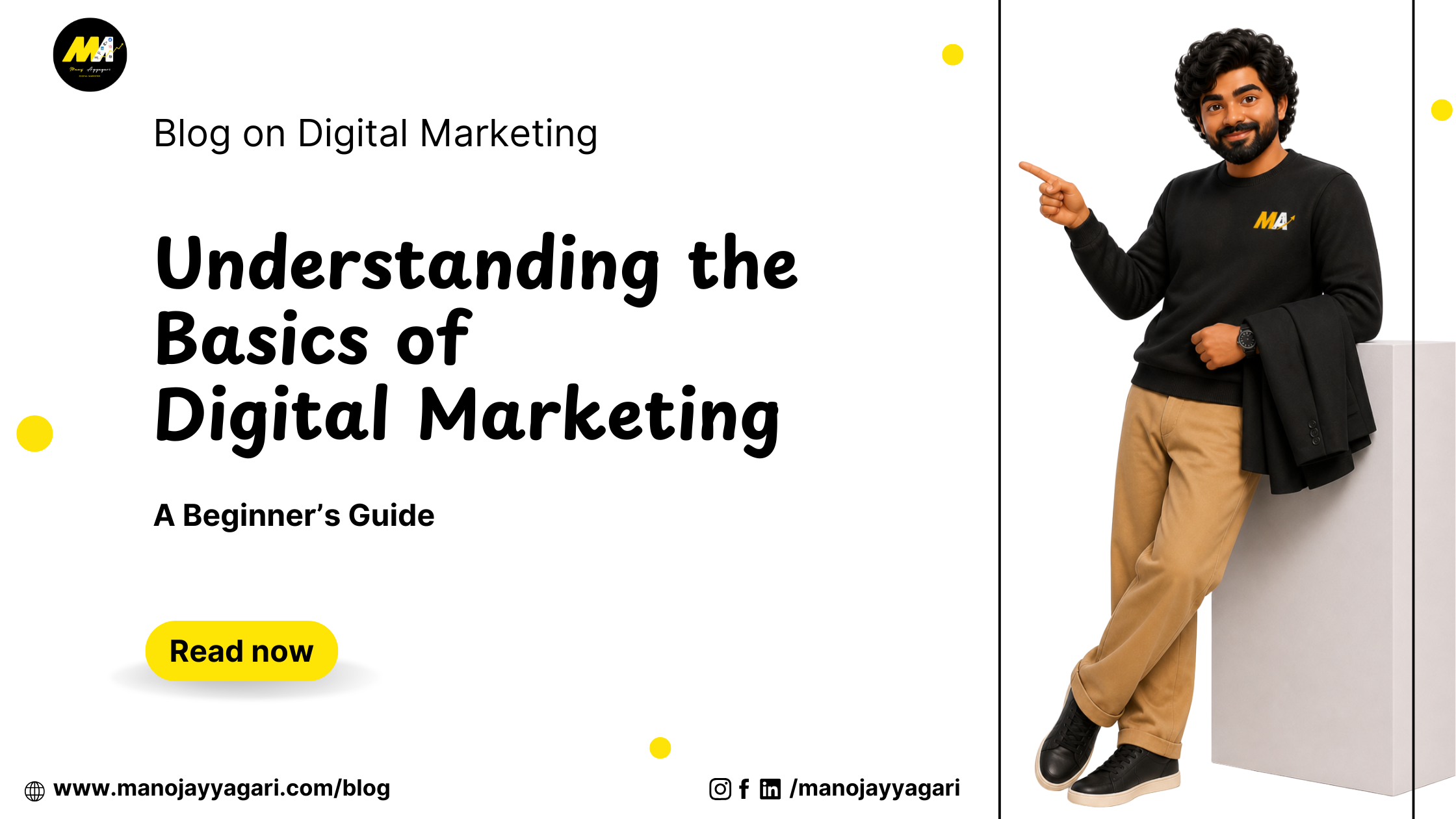
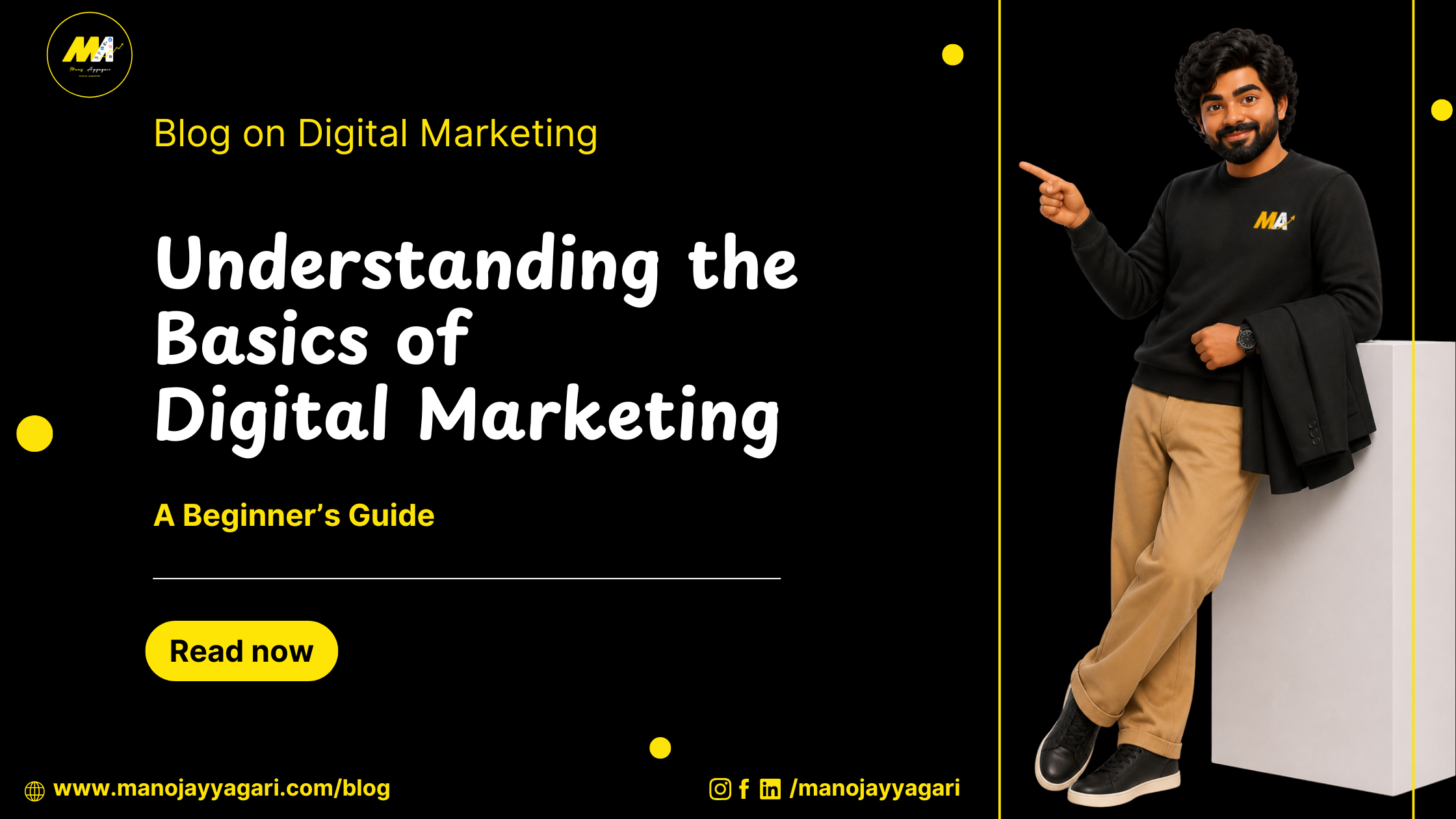
Understanding the Basics of Digital Marketing : A Beginner’s Guide
In today’s competitive landscape, understanding the basics of digital marketing is a necessity, whether you’re a business owner, entrepreneur, or just venturing into the marketing field. Digital marketing has grown from a supplementary aspect of marketing to a critical element in reaching and engaging target audiences. For beginners, getting to grips with core concepts like SEO, PPC, and social media marketing can feel overwhelming, but starting with the fundamentals will put you on the right path. In this guide, I, Manoj Ayyagari, will take you through the essentials of digital marketing, drawing on my experience to explain each component in an easy-to-understand way. By the end, you’ll have a clearer understanding of how to implement these strategies to grow your online presence. What is Digital Marketing? At its core, digital marketing refers to any form of marketing that occurs online. It encompasses all activities aimed at promoting products or services through digital channels such as search engines, websites, social media, email, and mobile apps. Unlike traditional marketing, digital marketing allows for more targeted advertising, better tracking, and an immediate connection with your audience. The Key Components of Digital Marketing Let’s dive into the essential elements that form the foundation of digital marketing: 1. Search Engine Optimization (SEO) SEO is the process of optimizing your website and its content so that search engines like Google rank it higher in their results. When your site ranks higher, it gets more visibility, more organic traffic, and ultimately, more potential customers. There are two primary categories within SEO: SEO is a long-term strategy, but when done right, it can produce significant returns in terms of organic traffic and customer engagement. 2. Pay-Per-Click (PPC) Advertising PPC advertising allows businesses to place ads on search engines or social media platforms, and they only pay when a user clicks on their ad. Google Ads and Facebook Ads are among the most popular platforms for PPC campaigns. PPC is a fantastic way to drive immediate traffic to your site, but it requires careful budget management and precise targeting. With PPC, you can control the demographics, interests, and behaviors of the audience you want to reach, ensuring your ads are seen by those most likely to convert. A few key aspects of PPC are: 3. Social Media Marketing Social media marketing involves promoting your brand, products, or services through platforms like Facebook, Instagram, LinkedIn, Twitter, and Pinterest. Each platform serves a unique audience, so it’s important to tailor your content to the platform you’re using. Effective social media marketing requires consistent engagement, providing valuable content, and responding to comments and messages. By fostering relationships with your audience, you build brand loyalty and can turn followers into customers. 4. Email Marketing Email marketing is one of the most cost-effective digital marketing strategies. It allows businesses to connect with their audience directly, providing personalized content, promotions, and updates. Some important aspects of email marketing include: 5. Content Marketing Content marketing is all about creating and sharing valuable content to attract and retain customers. It can take many forms, including blog posts, videos, infographics, podcasts, and eBooks. By providing useful content, you build trust with your audience and position yourself as an authority in your industry. This leads to higher engagement, better SEO rankings, and ultimately, more sales. The key to content marketing is consistency. Regularly publishing high-quality content keeps your audience engaged and returning to your site. Why Digital Marketing Matters With more people using the internet daily, digital marketing is an essential tool for reaching your audience where they are. Unlike traditional marketing methods like print and television ads, digital marketing allows for precise targeting and measurable results. In today’s world, simply having an online presence isn’t enough. You need to actively engage with your audience, provide value, and optimize your strategies based on data. By understanding and implementing the basics of digital marketing, you’re setting yourself up for long-term success. Conclusion In conclusion, understanding the basics of digital marketing is essential for anyone looking to succeed in today’s online landscape. From SEO and PPC to social media and email marketing, each component plays a crucial role in establishing a strong digital presence and effectively reaching your target audience. By grasping these fundamentals, you’ll not only enhance your marketing efforts but also create meaningful connections with your customers. Remember, digital marketing is an ongoing journey of learning and adaptation. As you implement these strategies, keep analyzing your results and refining your approach. Also read How to Build a Solid Foundation in Digital Marketing here Follow me on LinkedIn for quick tips and strategies on digital marketing!