
When running a successful Facebook ad campaign, one of the most important steps is defining and reaching the right audience. If your ads don’t reach the people who are most likely to engage or convert, you could be wasting both time and money. In this guide, I will show you how to define and target the right audience for Facebook ads to maximize your results and boost your return on investment (ROI). 1. Understand Who Your Ideal Customers Are Before you can target the right audience for Facebook ads, it’s essential to have a clear understanding of your ideal customer. This begins with knowing their demographic information such as: In addition to demographics, consider their interests, buying behavior, and pain points. The more specific you are, the better. Tools like Facebook’s Audience Insights can help gather valuable data on your current customers or followers, helping you identify trends or characteristics shared by the majority of your target audience. 2. Utilize Facebook’s Core Audience Features Facebook offers several targeting features within its ad manager that allow you to reach the right audience based on a wide range of factors. This includes demographic data, interests, and behaviors, all of which can be used to define a highly targeted audience. With Core Audiences, you can choose from: By layering multiple criteria, you ensure that your ad reaches people who are genuinely interested in your products or services, leading to better engagement. 3. Use Custom Audiences to Reach Specific Groups One of the most powerful tools for finding the right target audience for Facebook ads is Facebook’s Custom Audiences feature. This allows you to upload your customer data (such as email lists) or use data from your website traffic (through Facebook Pixel) to target people who have already shown interest in your business. For example: Custom Audiences let you reconnect with people who already know your brand, increasing the likelihood of conversions since they’ve previously interacted with you. 4. Create Lookalike Audiences for Expansion Once you’ve set up Custom Audiences, you can use Facebook’s Lookalike Audiences feature to expand your reach by targeting people who are similar to your existing customers. Facebook analyzes the common characteristics of your Custom Audiences and finds new users who share those traits. For example, if your Custom Audience consists of your top-paying customers, Lookalike Audiences will help you find new users with similar behaviors, giving you a higher chance of acquiring new loyal customers. Lookalike Audiences are a powerful tool for scaling your business while maintaining a focus on users likely to engage with your brand. 5. A/B Test Your Targeting Options Lastly, it’s crucial to A/B test different audience segments to find the best-performing target audience for Facebook ads. You can experiment by creating separate ad sets for different demographics, interests, or behaviors. Monitor how each group responds to your ads, then optimize your targeting strategy based on the results. A/B testing gives you valuable insights into which segments are most responsive, allowing you to refine your future campaigns for improved efficiency. Conclusion In conclusion, defining and reaching the right target audience for Facebook ads is vital to the success of your campaign. By understanding your ideal customer, utilizing Facebook’s powerful targeting tools, and regularly testing different audiences, you can create ads that resonate, boost engagement, and increase conversions. Have any tips or experiences on targeting audiences for Facebook ads? Share your thoughts in the comments below! Check our Latest Blog on Why Digital Marketing Matters : Exploring Its Importance in Today’s World Follow me on LinkedIn for more
7 Tips for Creating Share-Worthy Content on Social Media
Social media thrives on content that resonates, engages, and—most importantly—gets shared. Creating share-worthy content is essential for increasing your reach, building brand awareness, and fostering connections with your audience. But how do you craft content that people are excited to share with their followers? In this blog, we’ll explore seven practical tips to help you create content that not only engages but also compels your audience to hit the share button. 1. Know Your Audience Inside Out Creating share-worthy content starts with understanding your audience—what they care about, what inspires them, and what they find valuable. Tailor your content to address their needs, challenges, and interests. Tip: Use social media analytics tools to track audience demographics, engagement patterns, and trending topics. The more you know about your audience, the better you can tailor content that speaks directly to them and encourages shares. 2. Make Your Content Visually Appealing Content with strong visuals tends to perform better on social media. People are more likely to share posts with eye-catching images, infographics, or videos that add value and aesthetic appeal to the message. Tip: Invest in high-quality visuals that are relevant to your content. Tools like Canva or Adobe Spark can help you create stunning visuals, even if you don’t have design experience. Ensure your brand colors and logo are incorporated for consistent branding. 3. Write Engaging, Relatable Captions Your visuals might grab attention, but it’s your captions that can inspire shares. Captions that are relatable, witty, emotional, or insightful often encourage people to engage and share with others who feel the same way. Tip: Ask questions, use humor, or share personal stories in your captions. Engage your audience in a conversation that makes them feel connected to your brand on a deeper level, which increases the likelihood of shares. 4. Share Valuable, Actionable Insights Content that offers practical tips, how-tos, or valuable information is often seen as worth sharing. When you provide actionable insights that solve a problem or teach something new, your audience is more inclined to share it with others. Tip: Create lists, guides, or infographics that offer quick tips or steps. This type of share-worthy content adds value and positions your brand as a helpful resource. 5. Tap into Trending Topics and Hashtags Leveraging current trends or popular hashtags can increase the visibility of your content and encourage more shares. Whether it’s participating in a trending challenge or incorporating a relevant hashtag, staying current can help you reach a wider audience. Tip: Use tools like Google Trends or social media platforms’ “Explore” sections to discover trending topics. Incorporate relevant, timely content that aligns with those trends, and include hashtags that amplify your reach. 6. Inspire Emotion Content that evokes strong emotions—whether joy, nostalgia, inspiration, or even humor—is more likely to be shared. When people connect emotionally with your content, they feel compelled to share it with their friends and followers. Tip: Create content that tells a story, sparks curiosity, or triggers an emotional response. Emotional content tends to go viral more easily because it taps into the human need for connection. 7. Include a Clear Call-to-Action (CTA) If you want people to share your content, sometimes you just need to ask! Including a clear call-to-action in your post can motivate your audience to engage and share the content with others. Tip: Use phrases like “Share this with someone who needs to see this” or “Tag a friend who could benefit from this.” A direct CTA gives your audience a gentle nudge to hit the share button. Conclusion Creating share-worthy content on social media is all about offering value, connecting emotionally, and engaging your audience with high-quality visuals and relatable messaging. By following these seven tips, you can create content that not only resonates with your audience but also inspires them to share it, helping to expand your brand’s reach and influence. Which tip are you most excited to try? Share your thoughts in the comments below ! Check out the Latest Blog on Email Marketing Mistakes to Avoid : Lessons Learned from Failed Campaigns Connect with me on LinkedIn
Email Marketing Mistakes to Avoid : Lessons Learned from Failed Campaigns
Email marketing remains one of the most powerful tools in a marketer’s arsenal. When done right, it can drive engagement, boost conversions, and foster long-lasting customer relationships. However, when mistakes are made, campaigns can quickly go off the rails, resulting in low open rates, unsubscriptions, and wasted efforts. Understanding common email marketing mistakes and learning from failed campaigns can help you avoid these pitfalls and maximize the effectiveness of your email strategy. In this blog, we’ll explore some of the most frequent email marketing mistakes and the lessons learned from campaigns that didn’t go as planned. 1. Ignoring Email List Segmentation One of the biggest email marketing mistakes is sending the same email to your entire list, regardless of your subscribers’ preferences or behaviors. This “one-size-fits-all” approach often results in disengagement because the content is not personalized to the needs or interests of individual recipients. Lesson Learned: Segmentation is key to delivering relevant content. By dividing your email list into smaller, more targeted groups based on factors like demographics, past purchases, or engagement history, you can send more personalized emails that resonate with each group. For example, new subscribers could receive welcome emails, while loyal customers could receive exclusive offers. 2. Overlooking Subject Line Importance The subject line is your first opportunity to make an impression, and it’s often the deciding factor for whether someone opens your email or sends it straight to the trash. A vague, boring, or spammy subject line is a surefire way to lose your audience’s interest. Lesson Learned: Craft compelling, concise, and attention-grabbing subject lines that clearly indicate the value inside the email. A/B testing different subject lines can help you determine which ones drive higher open rates. Avoid clickbait at all costs—your subject line should align with the email’s content to maintain trust with your audience. 3. Neglecting Mobile Optimization With more than half of emails being opened on mobile devices, neglecting mobile optimization is a critical email marketing mistake that can hinder the user experience. Emails that don’t render properly on smaller screens can frustrate recipients, leading to high bounce rates or immediate deletions. Lesson Learned: Always design your emails with mobile users in mind. Use responsive email templates that adjust to different screen sizes, ensure text is readable without zooming, and keep images and buttons appropriately sized for easy clicks. A mobile-friendly design not only improves the user experience but also increases engagement rates. 4. Sending Too Many Emails Flooding your audience’s inbox with frequent, irrelevant emails is one of the easiest ways to turn them off and cause unsubscriptions. While consistent communication is important, overwhelming your subscribers can damage your brand’s reputation. Lesson Learned: Find the right balance between staying top-of-mind and respecting your audience’s inbox. Use data-driven insights to understand how often your audience prefers to hear from you and tailor your email frequency accordingly. Quality always trumps quantity—send emails with value, not just for the sake of sending. 5. Failing to Monitor Email Metrics Another common email marketing mistake is failing to track and analyze key performance metrics like open rates, click-through rates, and conversion rates. Without analyzing data, it’s difficult to understand what’s working and what’s not, leaving you in the dark about your campaign’s effectiveness. Lesson Learned: Regularly monitor your email marketing metrics to gain valuable insights into your campaigns’ performance. Adjust your strategy based on these insights to continuously improve. For example, if you notice a high bounce rate, you may need to clean your email list or optimize your subject lines for better engagement. 6. Not Having a Clear Call-to-Action (CTA) Even if you’ve nailed your email content, a poorly placed or unclear call-to-action can lead to missed opportunities. A weak or confusing CTA will fail to guide your subscribers toward the next step, whether it’s making a purchase, signing up for a webinar, or downloading a guide. Lesson Learned: Your CTA should be clear, prominent, and actionable. Use strong, specific language like “Download Now” or “Get 20% Off Today” that encourages immediate action. Also, ensure the CTA is easy to find and stands out visually within the email design. 7. Focusing Solely on Promotions If every email you send is purely promotional, your subscribers may start to feel like they’re only valued for their wallets. This can lead to disengagement and ultimately, higher unsubscribe rates. Lesson Learned: Mix up your email content with educational, informative, and entertaining messages in addition to your promotions. By providing value beyond just discounts, you build a stronger relationship with your audience and keep them engaged long-term. Conclusion Avoiding these common email marketing mistakes can help you craft campaigns that resonate with your audience, drive engagement, and deliver results. Learn from failed campaigns and make data-driven adjustments to optimize your strategy. Remember, the key to success in email marketing lies in personalization, relevance, and consistent value. What mistakes have you encountered in email marketing? Share your experiences and lessons learned in the comments below! Check out the Latest Blog on The Importance of Facebook Pixel : How to Track Conversions and Measure Success Connect with me on LinkedIn
Why Digital Marketing Matters : Exploring Its Importance in Today’s World
In today’s competitive business environment, digital marketing strategies are more important than ever. With the shift toward online spaces, businesses must adopt effective methods to stay visible, engage customers, and drive sales. I, Manoj Ayyagari, will explore why digital marketing strategies are crucial in helping businesses succeed and adapt in a constantly evolving digital world. 1. Expanding Your Reach The internet has made the world more connected than ever, and with the right digital marketing strategies, you can reach audiences across the globe. Unlike traditional marketing, which limits your reach to a specific region, online marketing gives you access to diverse audiences from different locations, expanding your potential customer base significantly. Whether through social media, email campaigns, or search engine optimization, you can tailor your efforts to reach the right audience, no matter where they are. This global reach gives your business a competitive edge and opens doors to new markets. 2. Cost-Effectiveness Compared to Traditional Marketing One of the biggest benefits of digital marketing strategies is their cost-effectiveness. Traditional marketing methods like TV ads, billboards, and print media can be expensive, with no guaranteed results. On the other hand, digital marketing allows you to target your audience precisely, leading to a higher return on investment (ROI). Platforms like Facebook and Google Ads let you control your budget while targeting specific demographics, interests, and behaviors, ensuring that your message reaches people who are most likely to convert into customers. With a lower entry cost and scalable campaigns, even small businesses can compete with larger corporations. 3. Measurable and Data-Driven Results Unlike traditional marketing, where it’s challenging to measure the success of a campaign, digital marketing strategies offer clear and measurable results. Through analytics tools, you can track every aspect of your campaign, from the number of clicks and impressions to conversion rates and customer engagement. By regularly analyzing this data, you can fine-tune your strategies, ensuring that you’re getting the best possible results. This data-driven approach not only optimizes your current marketing efforts but also provides valuable insights for future campaigns. 4. Building Stronger Customer Relationships With digital marketing strategies, businesses can engage with customers in more personalized ways, building lasting relationships. Social media, for instance, allows for direct communication with your audience, fostering a sense of community around your brand. Through email marketing, you can provide tailored content to subscribers, enhancing their experience with your brand. By nurturing these relationships, businesses can create loyal customers who are more likely to engage with the brand, recommend it to others, and make repeat purchases. 5. Staying Competitive in the Market Finally, adopting effective digital marketing strategies is crucial for staying competitive. In today’s market, consumers expect brands to have an online presence, and businesses that fail to meet this expectation risk losing customers to more digitally savvy competitors. By embracing the right strategies, from content marketing to paid advertising, you ensure that your business remains top-of-mind for consumers, even in a crowded marketplace. Conclusion In conclusion, digital marketing strategies are not just a trend—they are the foundation for modern business success. By expanding your reach, optimizing your budget, building customer relationships, and staying competitive, digital marketing provides a roadmap for growth and sustainability in the digital age. What are your thoughts on the importance of digital marketing today? Share your comments below ! Check our Recent Blog on Why Content Marketing Should Be the Heart of Your Digital Strategy Follow me on LinkedIn for more
4 Common Digital Marketing Myths Debunked : Separating Fact from Fiction
Understanding Digital Marketing Myths is essential for anyone involved in online marketing. In a rapidly evolving field, misinformation can lead to misguided strategies and wasted resources. Many myths persist in the digital marketing landscape, often creating confusion and hindering progress. This blog aims to debunk four common misconceptions, empowering you with the facts needed to navigate the digital marketing world effectively. In this article, I will clarify these myths, providing insights that can enhance your digital marketing strategies and drive better results. Myth 1: More Traffic Equals More Sales One of the most pervasive myths is that simply increasing website traffic will automatically lead to higher sales. While traffic is undoubtedly important, it’s not the sole factor in driving conversions. Here’s why: Myth 2: Social Media is Only for Brand Awareness Many marketers believe that social media is only useful for building brand awareness. While awareness is one of its key benefits, social media can serve various purposes, including: Myth 3: SEO is a One-Time Effort Another common misconception is that search engine optimization (SEO) is a one-time task. In reality, effective SEO requires ongoing effort and adaptation. Here’s why: Myth 4: Email Marketing is Dead Despite the rise of social media and other digital marketing channels, the myth that email marketing is no longer effective is far from the truth. Here’s why email marketing remains a powerful tool: Conclusion In conclusion, debunking Digital Marketing Myths is essential for any marketer aiming to maximize their efforts and achieve tangible results. By understanding the truth behind these misconceptions, you can make informed decisions that enhance your marketing strategies.Are there any myths you’ve encountered in your digital marketing journey? I’d love to hear your experiences and thoughts in the comments below ! Check out our latest blog SEO 101: A Beginner’s Guide to Search Engine Optimization Follow me on LinkedIn for more
Why Content Marketing Should Be the Heart of Your Digital Strategy
In today’s digital landscape, businesses are constantly vying for attention amidst a sea of information. To stand out, it’s essential to have a robust digital strategy, and at the heart of that strategy should be content marketing. In this blog, I, Manoj Ayyagari, will delve into why content marketing is crucial for your digital strategy and how it can elevate your brand presence, engage your audience, and ultimately drive conversions. 1. Establishes Brand Authority Creating valuable and informative content helps position your brand as an authority in your industry. When you consistently provide high-quality content, your audience begins to trust your expertise, making them more likely to turn to you for solutions to their problems. By sharing insights, tips, and relevant information, you demonstrate your knowledge and build credibility. Example: For instance, a company that regularly publishes well-researched articles on industry trends is more likely to be viewed as a leader than one that rarely communicates. This authority fosters trust, which is essential for long-term customer relationships. 2. Enhances Audience Engagement Content marketing allows you to connect with your audience on a deeper level. Engaging content—whether it’s blog posts, videos, or social media updates—encourages interaction and dialogue. When your audience feels engaged, they’re more likely to share your content, leading to organic reach and increased visibility. Techniques: These strategies create a two-way conversation, making your audience feel valued and understood. 3. Drives Organic Traffic One of the primary benefits of effective content marketing is its ability to improve your website’s search engine optimization (SEO). By regularly producing optimized content, you can attract more organic traffic to your site. Search engines favor websites that frequently update their content, and high-quality, keyword-rich articles can significantly improve your rankings. Strategies: The more valuable content you create, the more opportunities you have to capture new visitors and convert them into customers. 4. Supports Lead Generation Content marketing is an effective tool for generating leads. By providing valuable resources, such as eBooks, webinars, or whitepapers, you can entice visitors to share their contact information. This not only helps build your email list but also allows you to nurture leads through targeted follow-ups. Lead Magnets: These methods enable you to cultivate relationships with potential customers, guiding them through the buyer’s journey. 5. Informs Your Audience About Your Products and Services Content marketing is a powerful way to educate your audience about your products and services. By crafting informative content that highlights the benefits and features of what you offer, you can help potential customers make informed decisions. Formats: By making your offerings clear and relatable, you reduce friction in the purchasing process. Conclusion In conclusion, content marketing should be at the core of your digital strategy. It establishes your brand authority, enhances audience engagement, drives organic traffic, supports lead generation, and informs customers about your offerings. Investing in a solid content marketing strategy will not only enhance your online presence but also foster lasting relationships with your audience. How has content marketing impacted your digital strategy? Share your thoughts and experiences in the comments below—I’d love to hear from you! Check out the Latest Blog on 5 Email Marketing Platforms to Simplify Your Campaigns Follow me on LinkedIn for more
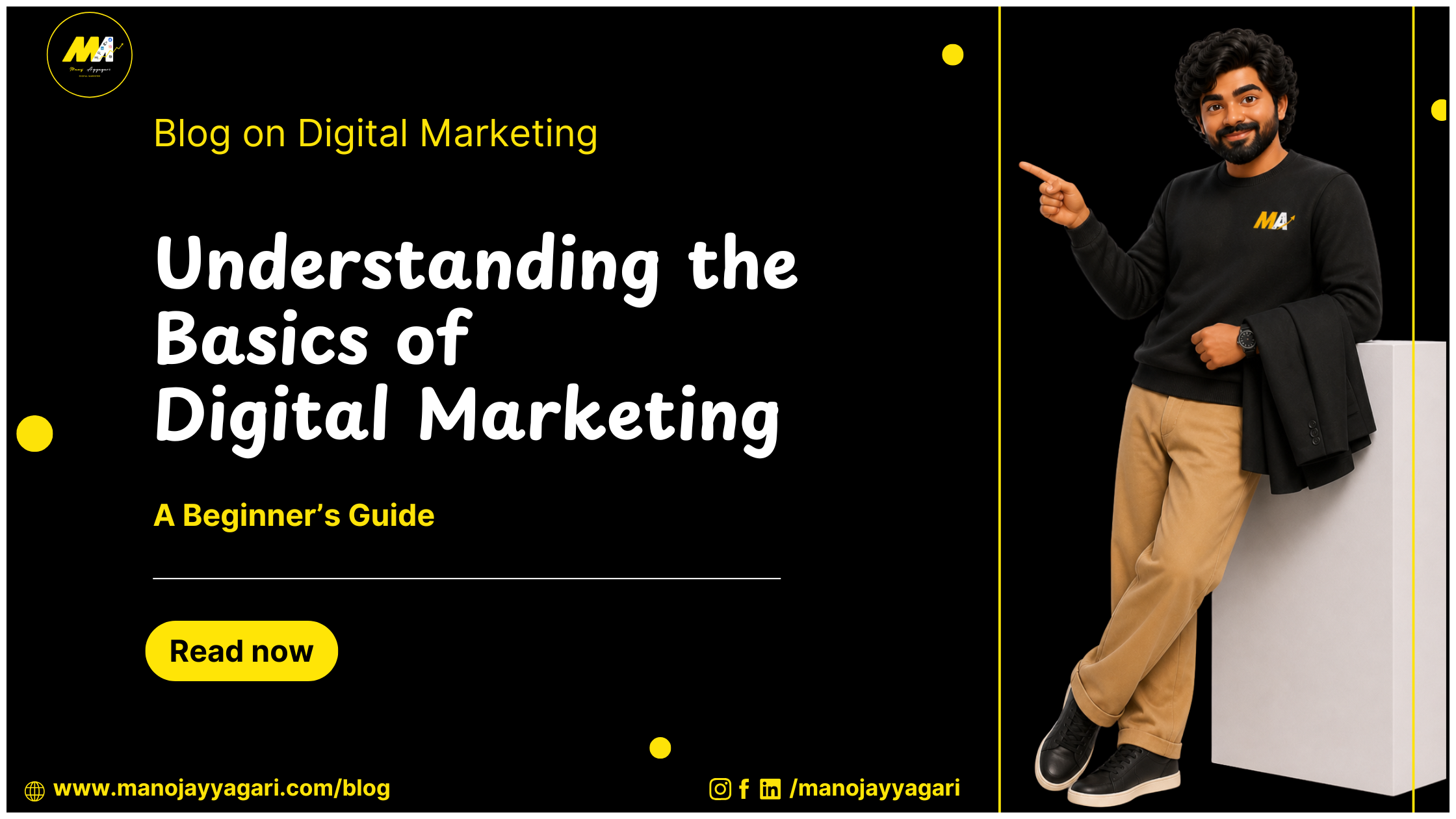
Understanding the Basics of Digital Marketing : A Beginner’s Guide
In today’s competitive landscape, understanding the basics of digital marketing is a necessity, whether you’re a business owner, entrepreneur, or just venturing into the marketing field. Digital marketing has grown from a supplementary aspect of marketing to a critical element in reaching and engaging target audiences. For beginners, getting to grips with core concepts like SEO, PPC, and social media marketing can feel overwhelming, but starting with the fundamentals will put you on the right path. In this guide, I, Manoj Ayyagari, will take you through the essentials of digital marketing, drawing on my experience to explain each component in an easy-to-understand way. By the end, you’ll have a clearer understanding of how to implement these strategies to grow your online presence. What is Digital Marketing? At its core, digital marketing refers to any form of marketing that occurs online. It encompasses all activities aimed at promoting products or services through digital channels such as search engines, websites, social media, email, and mobile apps. Unlike traditional marketing, digital marketing allows for more targeted advertising, better tracking, and an immediate connection with your audience. The Key Components of Digital Marketing Let’s dive into the essential elements that form the foundation of digital marketing: 1. Search Engine Optimization (SEO) SEO is the process of optimizing your website and its content so that search engines like Google rank it higher in their results. When your site ranks higher, it gets more visibility, more organic traffic, and ultimately, more potential customers. There are two primary categories within SEO: SEO is a long-term strategy, but when done right, it can produce significant returns in terms of organic traffic and customer engagement. 2. Pay-Per-Click (PPC) Advertising PPC advertising allows businesses to place ads on search engines or social media platforms, and they only pay when a user clicks on their ad. Google Ads and Facebook Ads are among the most popular platforms for PPC campaigns. PPC is a fantastic way to drive immediate traffic to your site, but it requires careful budget management and precise targeting. With PPC, you can control the demographics, interests, and behaviors of the audience you want to reach, ensuring your ads are seen by those most likely to convert. A few key aspects of PPC are: 3. Social Media Marketing Social media marketing involves promoting your brand, products, or services through platforms like Facebook, Instagram, LinkedIn, Twitter, and Pinterest. Each platform serves a unique audience, so it’s important to tailor your content to the platform you’re using. Effective social media marketing requires consistent engagement, providing valuable content, and responding to comments and messages. By fostering relationships with your audience, you build brand loyalty and can turn followers into customers. 4. Email Marketing Email marketing is one of the most cost-effective digital marketing strategies. It allows businesses to connect with their audience directly, providing personalized content, promotions, and updates. Some important aspects of email marketing include: 5. Content Marketing Content marketing is all about creating and sharing valuable content to attract and retain customers. It can take many forms, including blog posts, videos, infographics, podcasts, and eBooks. By providing useful content, you build trust with your audience and position yourself as an authority in your industry. This leads to higher engagement, better SEO rankings, and ultimately, more sales. The key to content marketing is consistency. Regularly publishing high-quality content keeps your audience engaged and returning to your site. Why Digital Marketing Matters With more people using the internet daily, digital marketing is an essential tool for reaching your audience where they are. Unlike traditional marketing methods like print and television ads, digital marketing allows for precise targeting and measurable results. In today’s world, simply having an online presence isn’t enough. You need to actively engage with your audience, provide value, and optimize your strategies based on data. By understanding and implementing the basics of digital marketing, you’re setting yourself up for long-term success. Conclusion In conclusion, understanding the basics of digital marketing is essential for anyone looking to succeed in today’s online landscape. From SEO and PPC to social media and email marketing, each component plays a crucial role in establishing a strong digital presence and effectively reaching your target audience. By grasping these fundamentals, you’ll not only enhance your marketing efforts but also create meaningful connections with your customers. Remember, digital marketing is an ongoing journey of learning and adaptation. As you implement these strategies, keep analyzing your results and refining your approach. Also read How to Build a Solid Foundation in Digital Marketing here Follow me on LinkedIn for quick tips and strategies on digital marketing!
SEO 101: A Beginner’s Guide to Search Engine Optimization
Understanding SEO 101 is crucial for anyone looking to improve their website’s visibility on search engines. Search Engine Optimization (SEO) is a multifaceted strategy that can drive organic traffic to your website, increase your brand’s online presence, and ultimately boost conversions. In today’s digital landscape, mastering the basics of SEO is more important than ever. In this blog, I will guide you through the foundational aspects of SEO, providing actionable insights to help you get started with search engine optimization. What is SEO? SEO, or Search Engine Optimization, is the practice of optimizing your website to rank higher in search engine results pages (SERPs). The higher your site appears in search results, the more likely it is that users will click on it. Effective SEO involves a combination of technical, content, and promotional strategies. Why is SEO Important? Key Components of SEO To get started with SEO, it’s essential to understand its core components: 1. Keyword Research Keyword research is the foundation of SEO. It involves identifying the terms and phrases that potential customers use to find your products or services. Here’s how to approach it: 2. On-Page SEO On-page SEO refers to the optimization of individual pages on your website. Here are some essential elements to focus on: 3. Technical SEO Technical SEO focuses on the backend of your website, ensuring that it meets the technical requirements of search engines. Here are a few key areas to consider: 4. Off-Page SEO Off-page SEO involves activities outside your website that influence your rankings, primarily through link building and social media engagement. Here’s how to improve off-page SEO: Best Practices for SEO Success To ensure your SEO efforts yield results, keep these best practices in mind: Conclusion In conclusion, mastering SEO 101 is essential for anyone looking to enhance their online presence. By focusing on keyword research, on-page optimization, technical SEO, and off-page strategies, you can improve your website’s visibility and drive organic traffic. Start implementing these strategies today to set your site up for SEO success! What tips or experiences do you have regarding search engine optimization? I’d love to hear your thoughts in the comments below! Check out our latest blog Navigating Digital Marketing Funnels : Understanding Each Stage Follow me on LinkedIn for more
Navigating Digital Marketing Funnels : Understanding Each Stage
Understanding Digital Marketing Funnels is crucial for any marketer looking to guide potential customers through their buying journey effectively. A well-structured funnel not only helps in nurturing leads but also increases conversion rates, ultimately boosting your business’s bottom line. Whether you are a novice or an experienced marketer, grasping the intricacies of each stage of the funnel can help you optimize your marketing strategy and drive success. In this blog, I will break down the stages of digital marketing funnels, offering insights into how to navigate them effectively for better engagement and conversions. What is a Digital Marketing Funnel? A digital marketing funnel represents the customer journey from awareness to conversion. It consists of several stages that potential customers pass through, and understanding these stages is essential for developing targeted marketing strategies. Navigating Each Stage of the Funnel Let’s delve into each stage of the digital marketing funnel and explore how to effectively navigate them. 1. Awareness Stage In this initial stage, your goal is to attract potential customers to your brand. Here are some effective strategies: 2. Consideration Stage At this point, leads are evaluating their options. To engage them effectively, consider the following strategies: 3. Conversion Stage In the conversion stage, your focus shifts to closing the deal. Here’s how to encourage leads to make a purchase: Best Practices for Managing Your Funnel To optimize your digital marketing funnel, consider these best practices: Conclusion In conclusion, navigating Digital Marketing Funnels is essential for driving successful marketing strategies. By understanding the stages of awareness, consideration, and conversion, you can effectively guide potential customers through their journey, enhancing engagement and increasing conversions. I encourage you to start implementing these strategies in your marketing efforts! What insights do you have about managing digital marketing funnels? Share your thoughts in the comments below! “I’d love to hear your thoughts on navigating digital marketing funnels! What strategies have worked best for you? Share your insights in the comments below!” Check out our latest blog on Content Marketing Basics Getting Started with Content Creation Follow me on LinkedIn for more
Content Marketing Basics : Getting Started with Content Creation
Understanding Content Marketing Basics is essential for anyone looking to make their mark in the digital world. In today’s content-driven landscape, effective content marketing can significantly enhance your brand visibility and engagement with your target audience. Whether you’re a business owner, marketer, or aspiring content creator, grasping these fundamentals will set the stage for your success. In this blog, I will guide you through the essentials of content marketing, helping you understand how to get started with content creation that resonates with your audience. Why Content Marketing Matters Content marketing is not just about creating content; it’s about creating value. Here are a few reasons why it’s important: Getting Started with Content Creation Starting with content creation can feel overwhelming, but breaking it down into manageable steps makes it easier. Here’s how to kick off your content marketing journey: 1. Define Your Goals Before creating content, determine what you aim to achieve. Here are a few common goals: 2. Know Your Audience Understanding your audience is crucial in content marketing. Conduct research to identify: 3. Choose Your Content Formats Various content formats cater to different audience preferences. Here are some popular options: 4. Create a Content Calendar Planning your content ahead of time is essential for maintaining consistency. A content calendar helps you: Best Practices for Effective Content Marketing Once you start creating content, keep these best practices in mind to maximize its impact: Conclusion In conclusion, understanding Content Marketing Basics is a vital step for anyone looking to engage their audience and grow their brand. By defining your goals, knowing your audience, choosing the right formats, and following best practices, you can create impactful content that drives results. I encourage you to start your content creation journey today! What strategies have you found most effective in your content marketing efforts? Share your thoughts in the comments below! Check out our latest blog on Introduction to Email Marketing: Building Your Subscriber List Follow me on LinkedIn for more